Isle of Man

The Manx Museum in Douglas

We encourage you to visit to the Manx Museum in Douglas as an introduction to the the history and culture of the Isle of Man. The Museum is owned by the island's heritage agency: Manx National Heritage (Eiraght Ashoonagh Vannin). It is superbly run and contains many artefacts and treasures that are unique to the Isle of Man. The collections are presented in a variety of formats including interactive displays, short films and more traditional galleries.

Douglas - Doolish

Douglas - Doolish

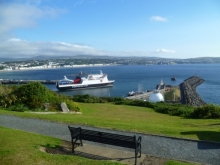
Douglas (Doolish), the capital of the Isle of Man, comprises a mixture of holiday resort, financial centre and working harbour.

Meayll Circle

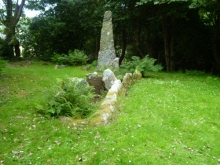
Meayll Circle

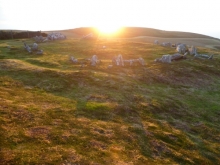
Also known as Mull Circle, the site is a megalithic chambered tomb covering an 18 metre diameter circle. There are six pairs of graves thought to date from the late Neolithical or early Bronze Age. The site has seen a long history from the Neolithic to Medieval times.

Calf of Man - Yn Cholloo

Calf of Man - Yn Cholloo

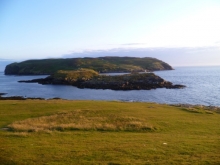
Calf of Man (Yn Cholloo) covers an area of about a square mile and is off the southwest of the Isle of Man from which it is separated by a stretch of water about 700 yards wide called the Calf Sound (Yn Cheyllys). The name ‘calf’ is derived from the Old Norse word ‘kalfr’ which means a small island close to a larger one.

Cronk Karran

Cronk Karran

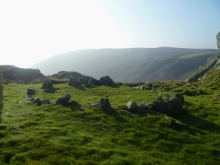
Cronk Karran is a Neolithical stone circle which is either a burial circle or hut circle. In the far south of the Island near the village of Cregneash.

Cregneash

Cregneash

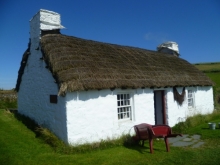
Cregneash is a small village set on the Mull Hills above Spanish Head. Until the start of the 1900's, Cregneash had hardly been touched by technology. Manx National Heritage acquired the village over a period of time and made the it into a living museum dedicated to preserving the Manx traditional ways of life. Many of the cottages are thatched and traditional ways of work and life are displayed.

Ballaqueeney Cross

Ballaqueeney Cross

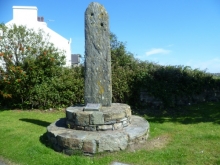
This is the tallest of the Manx Crosses. The cross-slab was once covered with carvings typical of the Viking age and is thought to be the work of the sculptor Gaut about 900-950 A.D. Gaut was a sculptor working in the Isle of Man in the mid tenth century and recorded as being the son of ‘Bjorn from Kolli’. Kolli is thought to be the island of Coll in the Hebrides. His carvings were based on Celtic art traditions also drawing on Scandinavian influences.

Balladoole

Keeill Vael - Balladoole

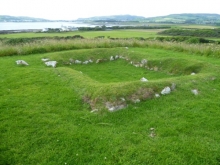
This site has three monuments, making it a really worthwhile stop off. When we visited, we were also impressed by the great views west across the blue waters of the Bay of Carrickey to Port St Mary in the distance.

The monuments include a Viking Ship Burial, Keeill Vael and Balladoole Hill Fort.

Derby Fort

Derby Fort

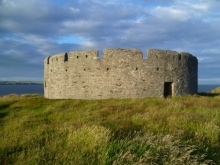
Derby Fort is a seventeenth century round fort constructed during the English Civil War. It is located on St Michael's Isle to the north of St Michael's Chapel.

King Orry's Grave

King Orry's Grave

There are two tombs on this site. The first is the largest known megalithic tomb on the island. The Cairn is made of coloured sandstone with a forecourt of 12 metres across and 4 metres deep. It contains three chambers once filled with burials. Following excavation, only one burial and bowl survived.

Pages

Subscribe to RSS - Isle of Man